

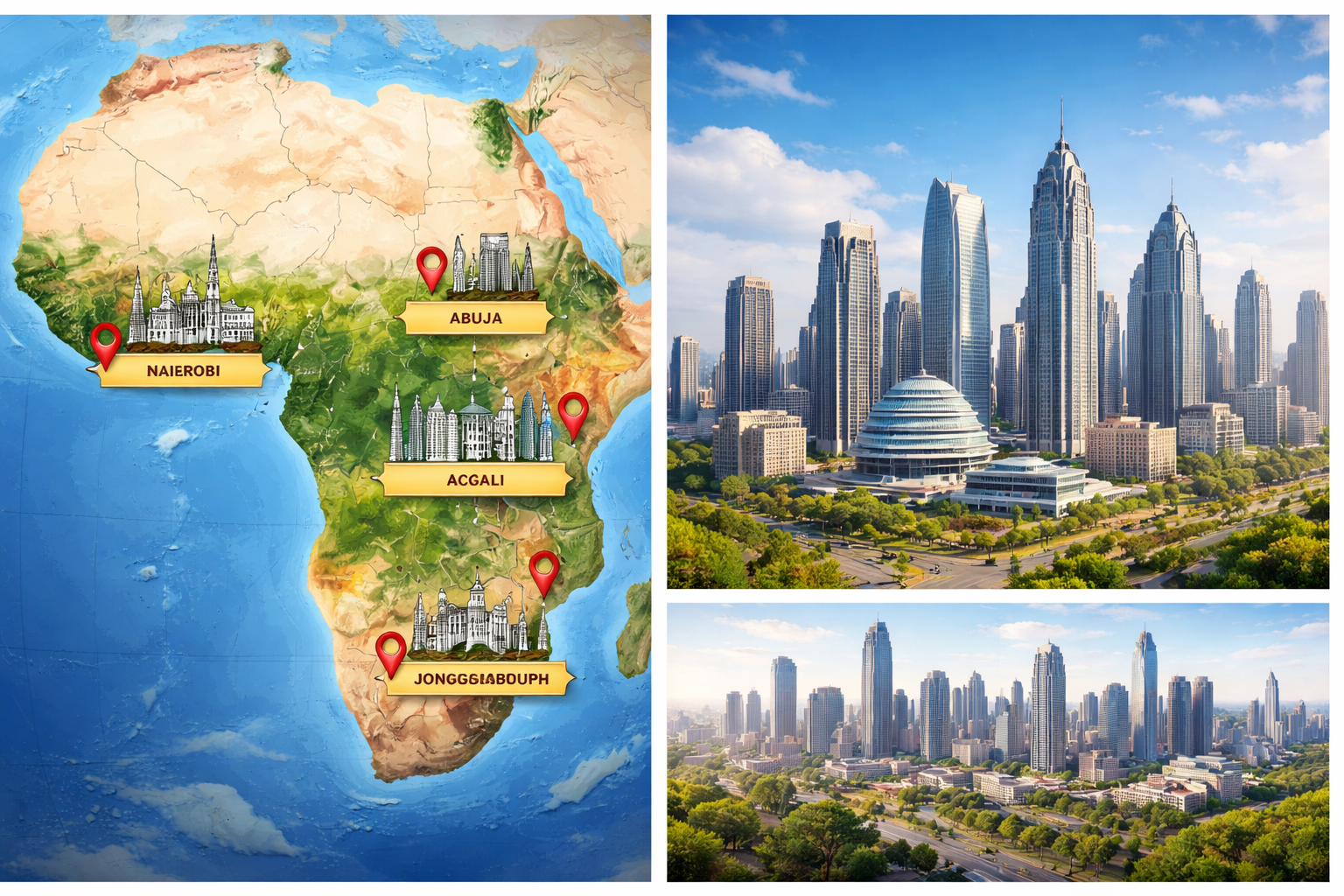
African Real Estate Investment Opportunities in 2026: Top Cities to Watch
African real estate investment opportunities are expanding rapidly as urban migration, economic growth, and large-scale infrastructure projects reshape major cities across the continent.
Author: Lucky Ajayi
Estimated Read Time: 3 minutes
Quick Overview
| City | Why It’s Attractive | Key Opportunities | Projected Growth / Yields |
| Nairobi, Kenya | East Africa’s tech and business hub, “Silicon Savannah” | Residential housing, coworking spaces, office & retail | Rental yields: 6–12%; GDP growth: 5.2% (2024–2026) |
| Abuja, Nigeria | Emerging economic hub with growing population and government infrastructure projects | Residential apartments, commercial offices | Property values rising; increasing demand across income segments |
| Accra, Ghana | Stable political climate and investor-friendly policies | Luxury & affordable residential, retail developments | Market value: 533.34B (2026); annual growth 3.44% |
| Kigali, Rwanda | Clean, green city with sustainable urban development | Residential, commercial, and green housing projects | Residential yields: 9.3%; Office yields: 10.8% |
| Johannesburg, South Africa | Financial capital with resilient property market | Residential, commercial, industrial | Office vacancy ~12%; Industrial rental growth ~6.2% |
Africa’s Real Estate Growth in 2026
African real estate investment opportunities are expanding rapidly as urban migration, economic growth, and large-scale infrastructure projects reshape major cities across the continent. According to the African Development Bank (AfDB), Africa’s GDP is projected to grow at an average of 4% annually, with countries such as Kenya, Ghana, and Rwanda expected to outperform the average. These trends continue to strengthen African real estate investment opportunities, particularly in fast-growing urban centers with strong infrastructure pipelines.
African real estate investment opportunities continues to benefit from population growth, government-backed infrastructure projects, and improving business environments. This article explores the top African cities poised for real estate growth in 2026 and highlights the key investment opportunities shaping each market.
Why Invest in African Real Estate Investment Opportunities?
Africa’s population, currently around 1.3 billion, is projected to nearly double to 2.8 billion by 2050, driving strong demand for housing, commercial offices, and retail outlets (United Nations).
Over 60% of the population is under 25, contributing to dynamic economic activity. Strategic government initiatives focused on infrastructure and business-friendly environments make real estate across Africa increasingly appealing for investors.
Nairobi, Kenya: East Africa’s Economic Hub
Nairobi, famously called the “Silicon Savannah,” is East Africa’s leading business and tech hub. The city hosts major global tech companies such as Microsoft and Google alongside a growing startup ecosystem, driving demand for modern housing, coworking spaces, and premium amenities.
Commercial real estate in Upper Hill and Westlands thrives with multinational corporations and high-end office complexes. Kenya’s GDP is projected to grow 5.2% annually between 2024 and 2026, fueling further commercial demand. Retail space in Nairobi is expected to reach 8.8 million square feet by 2026, reflecting the city’s growing lifestyle and consumer sector.
Residential Opportunities in Nairobi
Prime neighborhoods such as Kilimani, Karen, and Westlands attract expatriates, young professionals, and middle-income earners due to proximity to business districts and modern amenities.
Satellite towns like Kitengela and Athi River are emerging as key locations for affordable housing, appealing to the growing middle class. Suburban developments have reported property value growth of about 20% year-on-year, demonstrating Nairobi’s continued residential potential (Cytonn Investments, Real Estate 2025 Growth Prospects and Market Outlook).
Abuja, Nigeria: The Emerging Economic Hub
Abuja’s real estate market is rising steadily, driven by population growth, government infrastructure projects, and increasing commercial activity. Prime locations cater to high-income earners with modern residential and commercial properties, while suburban areas are seeing growing demand from middle-class professionals.
The city’s expanding office spaces, residential apartments, and mixed-use developments make it an attractive investment destination, with property values trending upward across key neighborhoods.
Accra, Ghana: West Africa’s Emerging Market
Accra attracts investors with its political stability, investor-friendly policies, and rapid urbanization. Affluent neighborhoods such as East Legon, Cantonments, and the Airport Residential Area host luxury apartments, townhouses, and standalone villas, while suburbs like Spintex and Adenta focus on affordable housing for the growing middle class.
Ghana’s real estate market is projected to reach 533.34 billion by 2026, with residential properties accounting for 456.11 billion. The sector is expected to grow at an annual rate of 3.44% through 2029. Rising urban migration drives demand for modern, cost-effective living spaces (Statista, 2026).
Commercial Real Estate in Accra
Accra’s emergence as a regional business hub has fueled strong demand for Grade A office spaces and retail outlets. Vacancy rates remain between 20% and 30% post-pandemic, creating opportunities for well-located, modern commercial developments (Knight Frank Intelligence Lab).
Kigali, Rwanda: The Clean and Green City
Kigali remains Rwanda’s economic engine. With GDP growth at 6.7% in 2023 and construction contributing 8% to GDP, the city is attracting investors with rental yields of 9.3% for residential units, 10.8% for offices, and 12.3% for retail (Cytonn).
Sustainable initiatives like Green City Kigali aim to deliver 1,000 green and affordable homes by 2026. Commercial growth is driven by the Kigali Convention Centre and surrounding business hubs, maintaining prime office occupancy above 80%.
Johannesburg, South Africa: The Financial Capital
Johannesburg’s real estate market remains resilient. The city’s prime residential areas, Sandton and Rosebank, have seen property appreciation of 5% annually. Office vacancy rates in Sandton remain around 12%, with rental prices between 180–250 ZAR/m².
Industrial growth is notable, with larger industrial spaces reporting 6.2% annual rental growth (Rode Report, Q2:2024). Overall, Johannesburg provides opportunities across residential, commercial, and industrial sectors.
Key Considerations for Investors
Invest in African Real Estate Investment Opportunities
Understanding market demand, regulation, and timing is critical when evaluating African real estate investment opportunities across different countries.
1. Location and Demand: Prioritize prime neighborhoods and cities with strong economic activity and growing middle-class populations.
2. Government Policies: Stay informed on regulations, tax incentives, and government-backed programs to maximize returns.
3. Sustainability and Innovation: Integrate sustainable building practices and smart technologies to appeal to modern buyers and tenants.
4. Diversification: Expand portfolios by including mixed-use developments, logistics hubs, and commercial properties alongside residential projects.
Conclusion & Call to Action
African real estate investment opportunities in 2026 are being shaped by urban growth, infrastructure expansion, and rising investor confidence across the continent. Africa’s real estate market is set for strong growth in 2026. Cities like Nairobi, Abuja, Accra, Kigali, and Johannesburg stand out as hotspots, each offering unique opportunities across residential, commercial, and retail sectors.
These African real estate investment opportunities offer long-term value for investors seeking growth, stability, and diversification across emerging and established markets.
Investors looking to capitalize on Africa’s urbanization, growing middle class, and economic expansion should focus on these emerging markets.
Invest in African Real Estate Investment Opportunities
We value your feedback! Let us know your thoughts on Africa’s real estate prospects by emailing [email protected]